Welcome to the Advanced Mediterranean Diet website!
This site is designed to help you lose excess weight with the Mediterranean diet.Sixty-five percent of adults in the United States are overweight or obese.At any given time, 30% of U.S. men and 45% of women are dieting, either in pursuit of culturally ideal attractiveness or health and longevity.The trend toward ballooning waistlines, which started 30 years ago, is not confined to the U.S. but is seen in most developed countries across the globe.
"So many options!"
I�m not an anti-fat crusader.If you want to carry an extra 70 pounds (32 kg) of fat and deal with the associated high blood pressure and diabetes, that�s your business. Many of my patients, however, are concerned about the adverse health effects of overweight and obesity, including knee arthritis, high blood pressure, heart attacks, type 2 diabetes mellitus, cancer, strokes, and premature death.Loss of excess weight can prevent or alleviate many of these illnesses.And there�s nothing inherently wrong with a reasonable pursuit of �culturally ideal attractiveness.�Most observers would agree that I look better in a swimsuit at 165 pounds than at 175.But that extra 10 pounds of fat doesn�t affect my health and longevity.
The healthy Mediterranean diet is not a weight-loss program per se.It�s a habitual style of eating that has long been associated with prolonged life span and lower rates of specific chronic illnesses: cardiovascular disease (e.g., heart attacks), certain cancers, and dementia.More recently, the Mediterranean diet has been shown to improve control of asthma and to prevent type 2 diabetes mellitus and Parkinsons disease.No other diet can legitimately make all these health claims.
So, if you�re going to lose excess weight, why not do it with an eating style�the Mediterranean diet�that could make you healthier and prolong your life?At this website, you�ll find everything you need for a serious effort at weight-loss Mediterranean-style.There is no other site like it.And it�s free.Why not start today?
For late-breaking information on healthy eating and waist management, visit the Advanced Mediterranean Life blog and join the discussion.
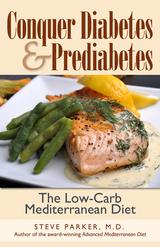
In 2011, I completed a comprehensive adaptation of the Mediterranean diet for people with type 2 diabetes and prediabetes. Diabetes predisposes to premature heart attacks, strokes, mental impairment, dementia, and death. The Mediterranean diet counteracts all of these tendencies, so it made sense to combine a diabetic diet with a Mediterranean diet. Conquer Diabetes and Prediabetes: The Low-Carb Mediterranean Diet is available at Amazon.com, Barnes and Noble, the Kindle Store, and Smashwords. The abbreviated Low-Carb Mediterranean Diet is available free online. Follow my ongoing musings, theories, and updates at the Diabetic Mediterranean Diet Blog. Please join the conversation; I would love to hear your ideas.
One of my goals for this website is to be the #1 Internet-based resource on the Mediterranean diet and weight loss via the Mediterranean diet.With that in mind, I welcome your comments and suggestions.Please help me save lives and improve others' quality of life by spreading the word. �Steve Parker, M.D. Email: steveparkermd@gmail.com
All matters regarding your health require supervision by a personal physician or other appropriate health professional familiar with your current health status. Always consult your personal physician before making any dietary or exercise changes.